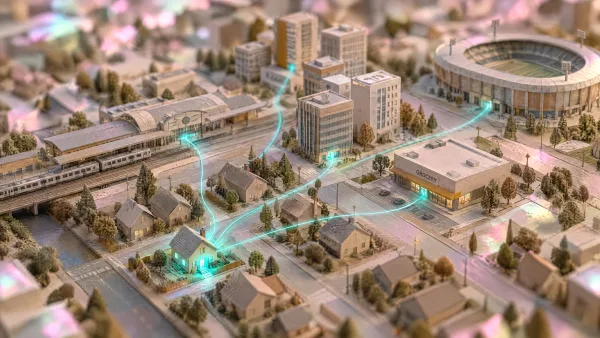
Apps All the Way Down
The app explosion will define the year. The race to connect corporate platforms with personal context will define the decade.

Apps are everywhere right now.
More of them, from more directions, built by more people than at any point in the history of software.
A founder can spin up a working product on Lovable before lunch. A marketing team can build an internal tool on Base44 without filing a single IT ticket. Glaze just brought the same capability to the desktop.
Meanwhile, AI agents are quietly doing work that used to require dedicated software, acting through APIs and protocols with no interface at all (what I’ve previously called the second web). And a growing number of products are replacing dashboards and menus with plain-language conversation, removing the interface from the equation entirely.
If you step back, the app explosion is happening on at least four fronts at once:
Corporate SaaS, still growing, still multiplying, still adding features no one asked for
Citizen-developer apps, built in minutes by people who have never written a line of code (aka vibe coders and agentic engineers)
Invisible apps (aka agents), where software doesn’t need a face (and where the new B2B, bot-to-bot, is already taking shape)
Conversational apps, where the interface dissolves into natural language. You don’t click through a dashboard. You ask a question.
The explosion has an inverse rising trend: fear.
If anyone can build an app, what happens to the companies that sell them?
The industry has landed on a term for this, the SaaSpocalypse.
In early February 2026, roughly $285 billion in SaaS market value vanished in a single day. Salesforce CEO Marc Benioff mentioned the term six times on the company’s most recent earnings call. Investors have been pulling back from software companies across the board.
It’s real…
and it is looking at the wrong thing.
The conversation is fixated on the app layer, on who builds them, how fast, and what they replace. But apps were always just the surface.
The real value, the durable value, has always lived in the platforms beneath them.
Apps Were Always the Surface
Think about the platforms that have endured and compounded over the past two decades. Salesforce didn’t win because it built a better CRM. It won because it built Force.com, a platform that let thousands of other apps plug in, extend, and depend on it. Shopify took the same path through commerce, becoming the ecosystem that merchants, developers, payment processors, and logistics providers all built on top of. AWS did it through infrastructure, turning into the horizontal layer that entire industries (cybersecurity, fintech, healthtech) used as the foundation for their own platforms.
Every time, the value ended up underneath the app.
The value has been in three platform layers, from the top down:
Ecosystems to extend, where third-party developers and partners build on your platform because the connectivity makes their product better (Force.com, Shopify’s app store)
Horizontal layers to support and scale, where entire categories of companies depend on your infrastructure as the foundation for their own (CrowdStrike on AWS, the whole cloud security stack)
Data to feed it all, where governed, structured, queryable data becomes the raw material that everything above it depends on (i.e., data lakes, datahouses, streaming data)
This is the part the SaaSpocalypse coverage keeps missing.
Every citizen developer building on Base44 needs somewhere to connect. Every invisible agent acting through MCP needs a system of record to act on. Every conversational interface needs governed data to talk about.
More apps, from more directions, built by more people… and all of them need something to plug into.
Platforms on Platforms
The question for companies has moved.
Not “should we build or buy apps?” but “where in our stack does knowledge accumulate, and are we investing in that layer?”
The depth beneath apps used to take years of integration, structured data, and organizational knowledge to develop.
Interfaces will keep changing and dissolving into new forms. The platforms underneath them are what stay. And the deeper you go in the stack, the harder it becomes to replicate what’s there.
But, it is no longer about just data. It is about something bigger that is making them more important than ever.
So what’s accumulating at those layers that makes them so hard to leave?
Context Is the New Royalty
As we go forward, context is the new big focus for all businesses.
Where data knows what it means, who needs it, and when it matters, context fills the gaps for AI-centric businesses (aka, all businesses going forward).
The difference between an AI that can write code and an AI that can write code that fits your organization’s architecture, standards, and strategic direction is (wait for it…) context.
This is also why context engineering is emerging as a discipline in its own right.
Your prompts are probably fine. Your context is the problem.
Databricks gives us a great framing here.
While the SaaSpocalypse plays out in headlines, the company reported a $5.4 billion revenue run rate, growing 65% year-over-year, with more than $1.4 billion from AI products.
Why?
Because that growth comes from sitting at the context layer, not the app layer.
CEO Ali Ghodsi made a point in a recent TechCrunch interview that gets at why: as interfaces shift to natural language and agents, people stop spending careers mastering specific product UIs. The expertise moat erodes.
The platform holding the governed data and institutional memory keeps compounding. The platform that has context is the future for businesses.
But there’s a layer forming underneath all of it that barely exists yet.
But Whose Context?
A recent HBR IdeaCast explored the concept of “Identic AI,” drawn from the book You to the Power of Two.
The idea: our future (as individuals in work and life) will be built on personalized agents that don’t just complete tasks but understand your judgment, your values, and take actions on your behalf.
This is all about personal context.
Your patterns, your decision-making style, the instincts you’ve built over a career of making calls that can’t be reduced to a spreadsheet.
As AI agents handle more of the execution (coordination, analysis, scheduling, all moving at machine speed), what differentiates people is judgment—the ability to choose the right goals. To know when the data is pointing in one direction, but something feels off.
Identic AI captures that judgment layer and makes it portable.
Your agent knows how you think, even as it plugs into different corporate platforms underneath.
So who owns that layer? Who will own the personal context layer of tomorrow?
Apple has always played identity at the device level. OpenAI and Anthropic collect your patterns from your conversational history. Google has your search, your email, and your documents. A growing group of developers is taking a different path entirely, buying Mac Minis and NVIDIA DGX Spark boxes to run local models and keep their context under their own roof (not likely the mainstream path, but a signal of how seriously the question is being taken).
Nobody — no big business, no developer-led movement — is owning the future of the personal context platform… yet.
This is the next space to watch, because the next most important ground in the entire tech stack is where how you think meets what your organization knows.
At the Bottom of the Stack
So, yes, the SaaSpocalypse is real. It just has the wrong layer in focus.
And yes, the core business tech platforms are deep and compounding.
But, it is the personal layer, the one that carries how you think and decide across every tool you touch, is still wide open.
And whoever connects that personal layer to the corporate platforms underneath will be the one to watch.
Imagine your agent carrying your judgment into a Databricks query, shaping the results based on how you evaluate trade-offs. Or your decision-making patterns informing how Salesforce surfaces opportunities, not based on what the company’s data says is likely, but on what your instincts say is worth pursuing.
That’s connected context: Corporate knowledge and personal intelligence flowing through the same stack, making each other more useful.
We’ve spent twenty years building apps on top of platforms.
Now, the next twenty might be about building platforms on top of human context — on top of, well, us.
Apps all the way down? Platforms all the way down. And at the very bottom, you.