Every House Gets a Personal AI Box
Running AI on your own hardware looks like a hobby right now. With the moves NVIDIA, Apple, and others are making, it will be mainstream in three years.
I’m obsessed with the Rule of Threes. That weird thing in life where you see the same thing show up three different times around you, all in quick succession.
In this case, it is AI (of course, because everything around us is AI Everything All The Time), but it is a specific flavor of AI, and it was showing up in three different ways.
The first was in business overall.
This is the year the agents actually, really, finally arrived for the everyday knowledge worker. Salesforce made Slackbot a personal agent in January. Anthropic made Claude Cowork generally available in April, and Microsoft answered with Copilot Cowork. Google announced Gemini Spark at I/O in May. OpenAI launched ChatGPT Work in July. And now, bot bragging is on the rise.
In turn, because an AI agent working a task on its own runs far longer than a person using a chatbot, every minute an agent runs costs dramatically more computing power. So the meters changed. Google moved Gemini to compute-based quotas and stopped publishing message counts. Claude and ChatGPT now have capacity limits tied to a five-hour window and a weekly window.
So we’re all buying computing capacity now.
For businesses of all sizes, this is changing IT expenses and business management narratives. As this HBR article frames out, vendors spent two years absorbing the cost of the chips behind their AI features and calling them unmetered, complimentary, and included. That was their investment in customer acquisition, and that era is ending.
Which is roughly when the same question showed up inside my own company.
A teammate at Opus Agency asked me whether we should build our own AI instead of renting it. We spend real money on credits, she pointed out, and all our work ends up sitting outside our company. The question of “should we be running this in the cloud?” — the Cloud Exit movement — has now moved from the technology leader to the everyday knowledge worker.
And then, the third place this theme turned up was right here on my personal laptop.
While I was putting together Conduct, the reputation system I proposed here last month, I pushed it through round after round of AI-powered adversarial review. Twelve rounds, split across Claude, ChatGPT, and Gemini, asking each one to tear it apart. Sure, the split helped get me different perspectives; however, it was really about managing compute capacity. I would hit the ceiling on one plan, switch tools, and hit the ceiling there, too.
Eventually, I started adding up what it was all costing me, which is how I ended up exploring a world where I could privately own nearly unlimited AI computing capacity.
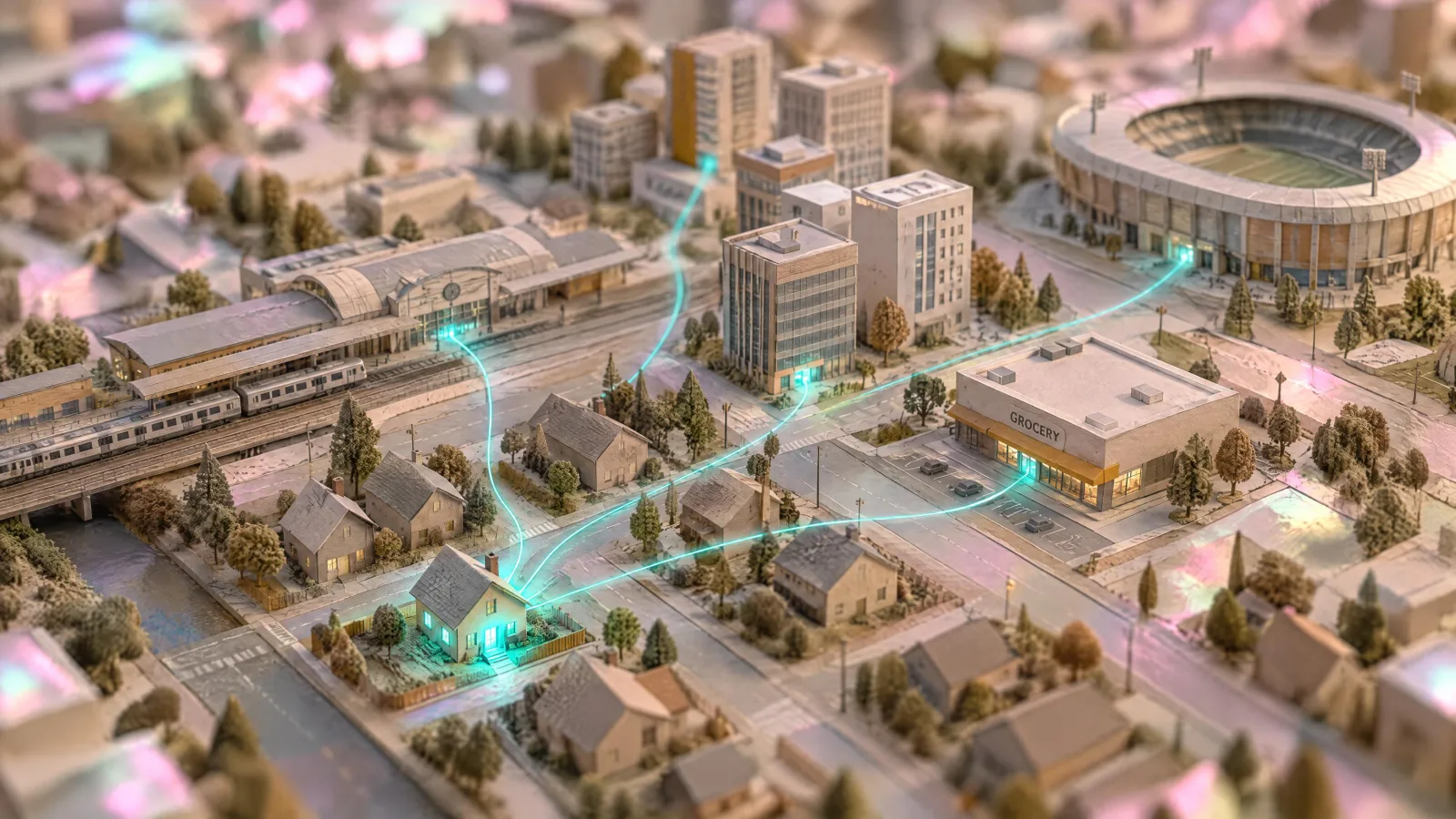
And now I see how most families will have something like it in the house. And, based on how fast it is moving, this idea of an “AI box in your home” will be mainstream in less than three years.
Sold-out Mac minis are the harbinger for what’s to come
The Mac mini has been Apple’s quiet little desktop for twenty years.
In April, Apple stopped taking orders for the high-memory versions, and lead times were 16 to 18 weeks. Why? People are buying them to run OpenClaw and other open-source agents at home, around the clock, on their own hardware.
Apple responded in an un-Apple‑y way.
In late August, months ahead of their usual fall cycle, they announced new Mac minis with the M6 and M5 Pro chips, four times faster at AI work than the machines they replaced. Read Apple’s own press release, and the positioning is plain: they describe the mini as a desktop for always-on, deskside agentic computing.
With just one Mac mini, we can be off and running in a homebrew-like, open-source world of AI compute.
But even with great specs, one computer will quickly run out of computing power.
NVIDIA saw that and recently released PAIR — the Personal AI Router — as free, open-source software that finds the computers already sitting in your house, links them over your own Wi-Fi, and lets a single AI model run across all of them. Your gaming PC, your work laptop, a Mac, all of them networked as a super AI compute cluster.
The example NVIDIA used to explain it is a family. A dad with two machines, a mom with a laptop, two kids with a gaming desktop, and a MacBook Pro. All that computing power is sitting idle most of the day. All of that is a world of free tokens waiting to be used.
(Sidebar: A company called Span is running at the same house from the opposite direction. Working with NVIDIA and the homebuilder PulteGroup, they mount a liquid-cooled box on the outside wall of homes, next to the HVAC unit, and rent your home’s electrical capacity to AI cloud providers. The homeowner gets paid for the power and the bandwidth.)
Between Mac minis and networked devices, homes are quickly building compute capacity, but that is only half of the equation. The other half are the AI models they can run.
The models turned out to be the easier half
Until recently, every good model was a frontier model from one of the Big Tech Companies. Open source models were, as one would expect, lagging.
But that situation has changed faster than I expected.
SemiAnalysis tracks open models against frontier ones across three generations and found the gap closing in half the time with each one.
In the agentic era, the best open model passed the leading commercial one in under five months. Meta released the weights for its Muse Spark model and announced a smaller version built to run on a laptop. Chinese open models now cost a fraction of the leading American ones, and companies have started routing real work to them.
Then NVIDIA agreed to pay $13 billion for Hugging Face, the site where developers download working AI models the way the rest of us download apps. It is the second-largest acquisition the company has ever made, and the logic is direct: NVIDIA sells the hardware that those free models run on. The better and cheaper the models get, the more hardware the world buys.
So both halves are coming together nicely now.
This all feels like 1976
Building your own “home AI” today means choosing hardware, picking a model, tinkering to get it to work together, then wiring up more software to run it, configuring your routers so you can access it when out of the house, and keeping all of it running 24/7.
Millions of people are happily doing this “homebrew” work right now. This is why there are 18 million Hugging Face accounts, and why they were acquired for $13 billion.
It is a large, serious, growing group.
And it is growing exponentially.
And we’ve seen this exact story play out before. What was once new is new again.
In January 1975, Popular Electronics put the Altair 8800 on its cover, a computer that arrived as a box of parts with no keyboard and no screen. Two months later, a few dozen people started meeting in a garage in Menlo Park and called themselves the Homebrew Computer Club. They traded schematics, argued about chips, and built machines for the pleasure of owning one.
One of them was Steve Wozniak, who built a board to show his friends. Steve Jobs looked at the same board and saw something to sell—the Apple I shipped in 1976 as a bare board for hobbyists. The Apple II arrived a year later with a case, a keyboard, a power supply, and color, and you could buy it in a store and plug it in.
Two and a half years separated the kit from the home product that came into family rooms around the world.
Now, fifty years later, here in 2026, the world of Personal AI (or whatever will end up calling it) is on this same trajectory.
The first dedicated Personal AI products will ship this fall
At Computex 2026, NVIDIA announced the RTX Spark as “a new superchip that reinvents Windows PCs for the era of personal AI agents.”
This fall, ASUS, Dell, HP, Lenovo, Microsoft Surface, MSI, and more will release more than 30 laptops and 10 desktops that will bring “personal AI” to our homes.
Not to be outdone, AMD opened the IFA keynote in Berlin with the same focus. “We are entering the era of personal AI,” Jack Huynh told the room. The machine he unveiled, the Threadripper Halo Station, is a “supercomputer on your desk.”
Eight manufacturers, one event season, all establishing an emerging category of consumer goods.
Apple and Google are also racing to lead the Personal AI revolution
At his first keynote as CEO, John Ternus described the ideal AI device: it understands your personal context; it goes everywhere with you; it runs models on the device itself and reaches the cloud for heavier work; and it fits with everything else you already use. Then he states, of course, that there is no product in the world better designed to be your intelligent personal hub than the iPhone.
Google is building toward personal AI and home AI as well.
They just opened Google Home to outside agents, so Claude, ChatGPT, OpenClaw, and anything else built to plug into it can read your camera history and run your thermostat. Until now, the assistant in a Google house was Gemini. They would rather be the integrated layer everyone else builds on than the only thing in the room.
When I wrote about the AI integration race, I argued that whoever held the most layers, from business software down to the phone and the house, would deliver the best personal AI. I said the winner of that race will be Google. I believed it then, I believe it now.
In our home or in our pocket, Personal AI has got next
Fifty years after the Homebrew Computer Club, people still build their own PCs, millions of them every year, choosing the case and the board and the cooling. (After all, cyberdecks are a hot new new thing.)
Personal AI will probably split the same way.
Some people will build their own, with enormous control over the hardware, models, data, and software. Most of us will buy the version that has already been put together for us.
Three years from now, that could mean a box on a shelf, a phone in a pocket, or a collection of devices around the house working together. The form will vary, but the results will be the same: families will have their own AI computing capacity, holding more of their context and working on their behalf.
And we will take it all with us.
We will walk into stores with it. Open apps with it. Attend events with it. Call customer support with it.
Which means, very soon, the next customer a brand meets will arrive with their own connected context and personal AI right there with them.
As personal AI moves into our homes and pockets, personalization will start with what we bring with us.