Show the Work
The decisions behind our work are about to become part of what others expect to see.
There has never been a better time to make something.
Recently, a single person released seven free alternatives to Adobe’s apps. Across the internet, people are pulling the software off their own televisions and writing something they would rather use.
It goes past software too.
Two people at OpenAI designed an actual physical device in under a week, requirements and enclosure and circuit board and the software to run it, as a side project.
And recent readers of this newsletter will have seen that I’ve been on a roll with making things lately too.
I’ve built Conduct, my proposal for making “good to work with” a reputation you can carry from one business to another, and Stencil, the tool that sprays this newsletter’s wordmark differently every issue. Add a time zone+weather+currency+more tool, plus my experiments with animating graphics and reels for this newsletter, and I am having a lot of fun making a lot of things.
Back in January, I described this way of AI-infused working as being a chef and a foreman at the same time:
- Chef mode is routing across tools, dropping a prompt and moving to the next job while the previous one thinks.
- Foreman mode is handing substantial work to agents and managing how it comes together.
In that piece, I focused on how chefs and foremen keep the work moving. Who gets the work, in what order, moving toward what.
But there was an insight missing from my original framing.
Let’s go back to the kitchen
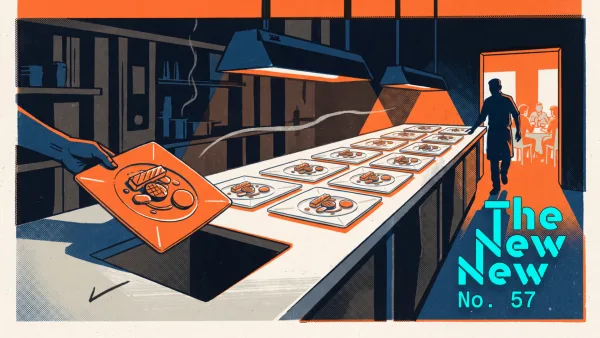
A chef’s reputation lives at the pass, where the plates cross the counter on their way to the room. Some go straight through, some need another minute, and some go back. The diner gets the meal without seeing those decisions.
Same on a job site, where the foreman walks the work, spots a problem, and gets it corrected before the wall closes. We experience the result of those judgments every time we walk into a finished building, while the choices themselves stay largely out of sight.
That sending-back is familiar work for an editor, a creative director, or a reviewer. Someone whose job includes telling you no before they are willing to sign their name to it.
Making something has always included deciding what gets through.
The work used to tell you something about the person
My teams open that time zone tool every day, and it tells them little about how I think.
Same with Open Conduct. You can read the proposal, poke at the scoring, disagree with it, and still have no idea what I considered and set aside along the way.
That used to be fine.
Producing a finished thing was hard enough that making one said something about the person who made it. A working app, a strategy deck, a campaign for a major brand. You could read someone’s capability off the result. You could look at a portfolio and see someone’s taste and talents.
But now, portfolios of finished work no longer show you much about talent behind them.
AI can help someone produce a working prototype or a persuasive document while they are still getting to grips with the subject. The result arrives looking capable either way, which leaves open questions about what they understood, what they challenged, and what they chose.
Everything I rejected is still sitting in the chat
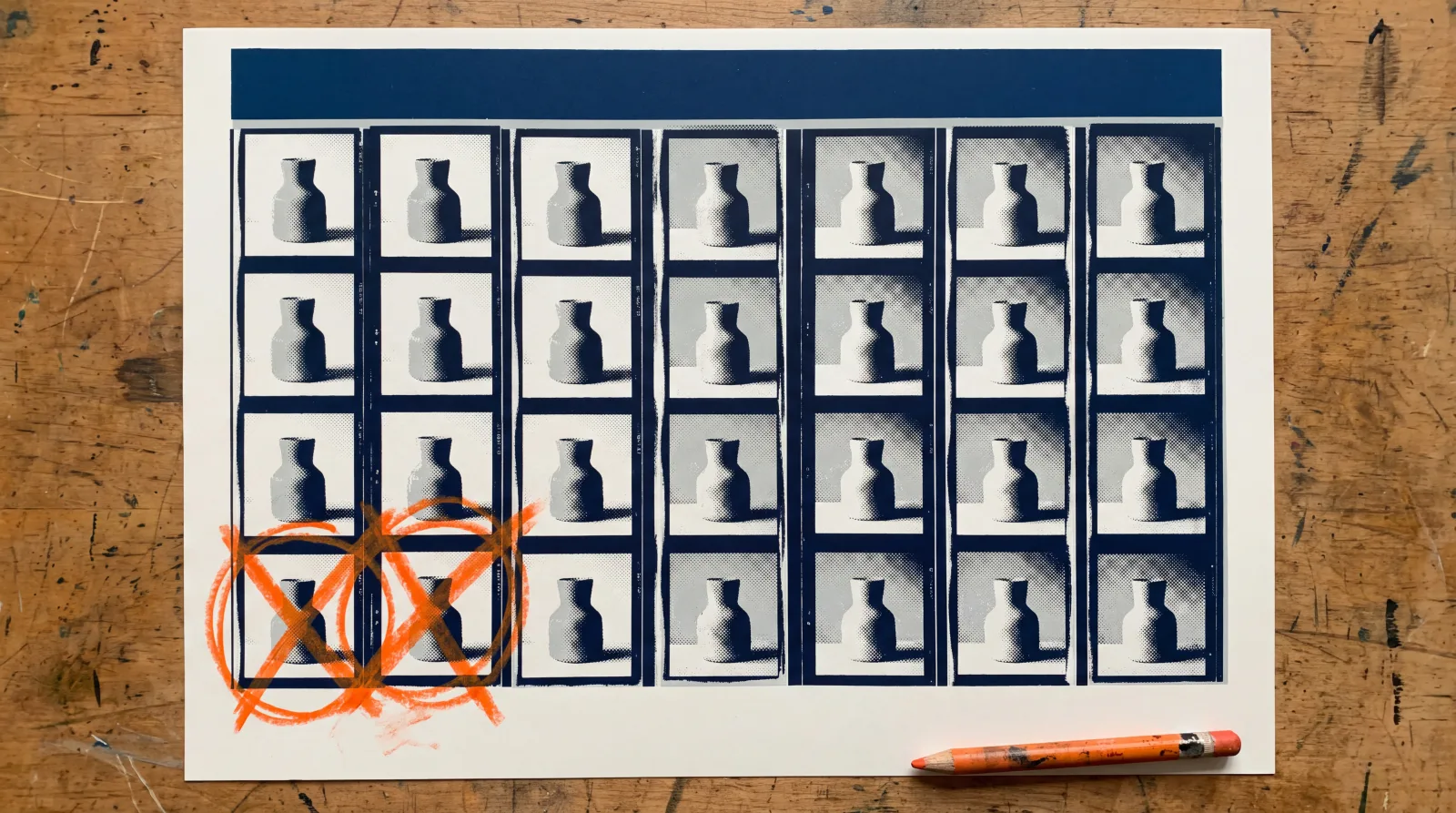
I have dozens and dozens of AI-infused explorations from this year. Ideas I dropped, directions I backed out of, questions I could not answer, with the reasoning still next to them.
That deep archive and context is what’s different now. Working this way in conversation keeps the alternatives and the objections, not just the output.
When I launched Conduct, I purposefully published a chunk of my own discard pile. I wanted automatic portability. I wanted it so that your score travels with you; every business sees it, automagically. For months it was the plan.
Then I ran twelve rounds of adversarial testing, handing Claude, ChatGPT, and Gemini invented scenarios and asking them to tear the thing apart. Portability came back as the weak point every time. A score that follows you everywhere is a score you cannot refuse.
So Conduct works the other way now. You choose what to share and who sees it: one relationship, one industry, or one overall number. (For the fellow nerds out there: simple averaging and blockchain died in the same rounds of adversarial reviews.)
None of that is visible in the final proposal. You can read the whole standard and never know portability was ever on the table, or why it came off.
That is true of almost everything any of us publishes or launches.
The work goes out, the thinking stays behind.
And, if you have worked anything out with AI this year, you have your own version of that discard pile.
We will start showing what we ruled out
In the near future, we will be expected to bring a few of our rejected ideas along with the work itself.
Not the whole process, but at least a view into two or three decisions, offered without being asked, with enough reasoning behind them that someone can take a run at it.
Answering questions about a choice you actually made takes the conversation somewhere else, where someone can follow your thinking, challenge an assumption, or ask what you would do differently.
The people who hire you, buy from you, and decide whether to work with you will want that conversation.
More than ever, going forward, that is what people will want from brands and the work they care about.
Because, more than ever, today, people want in. Not an introduction to the chef and a look at the finished, served dinner plate, but into the kitchen, and into the choices that made the dish what it is.
It’s becoming true for a dinner plate and even more true for a strategy deck, an app, a physical device, or anything someone launches next.
So leave the kitchen door open. Welcome people in. Show them the work, including what you left behind.
That is how they know what you brought forward is truly human, truly yours, and soon to be theirs.
That will be part of what we will all want (and, especially in business, expect) next.